How to play dominoes for beginners
To learn how to play dominoes, start with a double-six set and choose either the block game or the draw game. Both use the same matching rule, but they handle an unplayable turn differently: block players pass, while draw players take tiles from the boneyard.
How to play dominoes: the basic setup
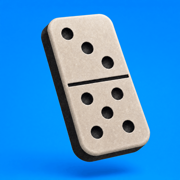
A double-six set has 28 tiles. Each tile has two ends, and each end shows zero through six pips; the blank end represents zero. Turn every tile face down and mix them. This face-down supply is commonly called the boneyard, stock, or bone pile.
For a common two-player block or draw game, each player takes seven tiles. With three or four players, five tiles each is a widespread deal, although many tables use seven with two players and adjust larger games differently. Keep your tiles hidden from opponents. Undealt tiles remain in the boneyard.
Choose a starting convention before play. A familiar rule is that the holder of the highest double leads it: double-six outranks double-five, and so on. If nobody holds a double, many rulesets use the heaviest tile, meaning the tile with the greatest pip total. Some groups instead draw for the first lead or rotate the opening lead.
The first tile begins the layout. Players then take turns, normally clockwise, adding one tile to an open end. One end of the played tile must match the number at that open end. A 6–3 can meet a six or a three. Turn doubles crosswise if that helps everyone see them, but in ordinary block and draw dominoes a double does not create extra branches.
Matching tiles and taking a turn
Only the exposed ends of the chain are playable. Suppose the chain has a four at one end and a blank at the other. A player may attach a tile with a four to the first end or a blank to the second. After attaching 4–2, the two becomes the new open end.
A legal play usually consists of one tile. Players may not rearrange earlier tiles, play on a closed side, or treat a blank as a wild symbol under standard block and draw rules. Blanks match blanks.
Table space can force the chain to bend, but its physical direction has no effect on play. A double placed crosswise still has just one exposed continuation unless the chosen game specifically calls it a spinner. Spinner rules belong to games such as some forms of All Fives, not to every domino game.
Draw dominoes rules
In the draw game, a player who cannot match either open end draws from the boneyard. A common rule is to keep drawing until finding a playable tile, then play it immediately. Many published versions require leaving the last two tiles undrawn, while others allow the stock to be exhausted. Agree on that detail before the deal.
If the permitted stock is empty and the player still cannot play, the player passes. Drawing changes the information in the hand, so opponents cannot know that a player still lacks a number merely because the player drew once.
The round normally ends when someone plays their last tile. It can also end when nobody can move and no legal draws remain. That second ending is called a blocked game.
Block dominoes rules
The block game has no drawing during the hand. If a player has no tile matching either open end, that player says “pass,” and the turn moves on. Any undealt tiles stay out of play for the whole hand.
Because a pass reveals information, block play rewards attention. If an opponent passes when both ends are two and five, that opponent held neither a two nor a five at that moment. Later plays may make that fact useful.
A round ends when one player empties a hand or when all players are unable to play. Rulesets differ on how many consecutive passes formally establish a block, especially with more than two players; the practical test is that every active player has had a turn with no legal move.
Dominoes rules and scoring
There is no single scoring system for every domino game. In one common Block calculation, the winner receives the opponents’ combined pips minus the winner’s own remaining pips when the hand blocks; after going out, the winner has none to subtract. Partnership and regional rules also use all opposing pips, differences between team totals, or rounding to fives.
If the round blocks, add the pips in each hand. A common rule awards the round to the player or partnership with the lowest remaining total, then scores either the opponents’ remaining pips or the difference between totals. Those are different systems; choose one rather than mixing them mid-match. Ties may produce no score, trigger a redeal, or be broken by a house rule.
Matches often continue to a target such as 100 points, but the target depends on the deal size, number of players, and local tradition. Write the target and scoring method down before the first hand.
For a physical game, Domino Scoreboard is a score keeper for real tabletop games covering five modes: Block, Draw, All Fives, Mexican Train, and Chicken Foot.
A sample two-player hand
Mix a double-six set and deal seven tiles to each player. Leave the other 14 face down. Player A holds double-five and Player B’s highest double is double-three, so Player A leads double-five under the highest-double convention.
Player B can attach any tile containing a five. After B plays 5–2, one open end is five and the other is two. Player A may play on either end. If Player A cannot, the response depends on the named ruleset: draw in the draw game, pass in the block game.
Continue until a player goes out or the layout blocks. Both players then expose their unplayed tiles and apply the agreed scoring method.
Common beginner mistakes
- Playing on a number that appears inside the chain rather than on an open end.
- Treating blank ends as wild instead of zero.
- Giving every double four playable sides without a spinner rule.
- Drawing in a block game or passing while legal draws remain in the chosen draw rules.
- Starting the next hand before recording the losing hand’s pips.
Most disputes disappear if the group names the game, deal size, drawing rule, blocked-hand calculation, and match target first.
FAQ
What is the easiest domino game to learn?
Two-player draw dominoes is forgiving because a player with no match can draw instead of losing the turn immediately. Block dominoes uses the same matching mechanic but makes passes more consequential.
Can you play dominoes with two people?
Yes. A common double-six setup deals seven tiles to each player and leaves the rest in the boneyard. In block play the stock stays unused; in draw play it supplies tiles.
Do you have to play a double first in dominoes?
Only if your selected rules require the highest-double opening. Some rules use the heaviest tile when no double is held, while others rotate the lead or draw to decide it.
What happens when nobody can play?
The hand is blocked. Under a common rule, the player or partnership with the lowest pip total wins the hand, but the points awarded and tie treatment are ruleset or house-rule choices.
Free Domino tools
- Domino Set CalculatorCompare common domino set sizes and check how many tiles and doubles each set contains.
- Domino Starting Hand CalculatorSet up Block, Draw or Mexican Train without arguing over how many dominoes each player gets.
- Mexican Train Score SheetEnter two to eight names and round scores. The lowest running total is highlighted automatically.